
Oat drinks & barista-style milks
Powder is dry-blended or hydrated with the base before homogenisation.
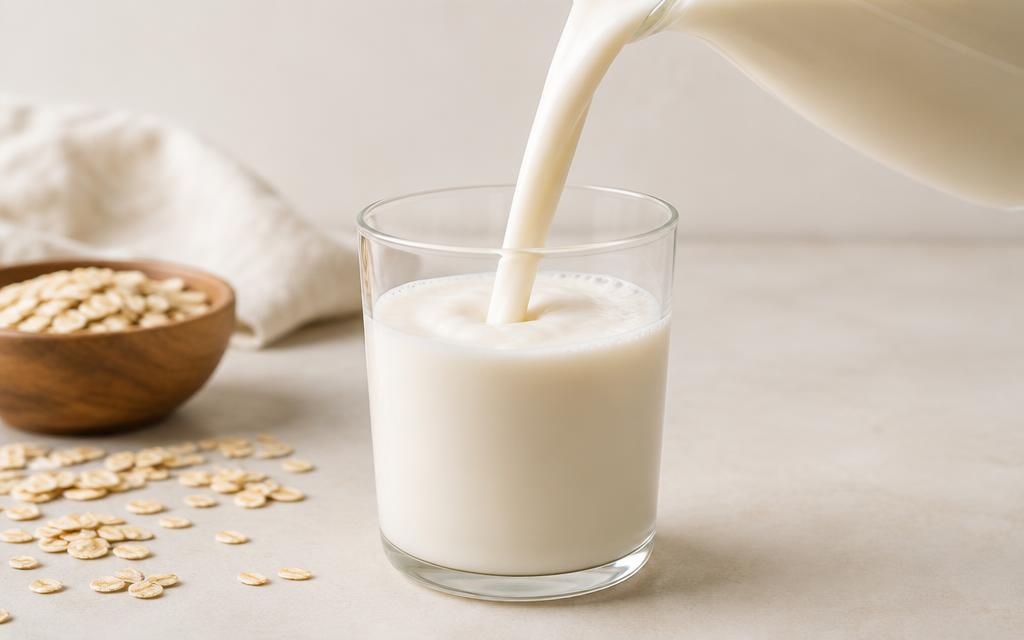
Oat, almond & plant milks
Helps the oil phase stay mixed with the water phase so plant milks pour and perform consistently across shelf life.
Manufacturing problem
Oat, almond and other plant bases carry oil without the natural phospholipids dairy has. Homogenisation creates small droplets, but nothing is positioned at the interface to keep them there through heat treatment, storage and transport.
What lecithin changes
De-oiled sunflower lecithin disperses in the water phase and positions at the oil-water interface, helping droplets stay mixed with the base.
Practical process roles, not a one-size-fits-all formulation claim.
Powder is dry-blended or hydrated with the base before homogenisation.
Supports oil and water mixing in nut bases with sensitive flavour profiles.
Multi-ingredient systems where the oil phase arrives from different sources.
This starting-point map helps your team choose a trial path. Exact guidance follows review of your process.
| Application | Format | Addition stage | Target effect |
|---|---|---|---|
| Oat drinks | Powder | Dry-blended or hydrated before homogenisation | Oil mixed with the water phase |
| Almond milks | Powder | With the base before homogenisation | Even oil distribution, no beany note |
| Barista-style plant milks | Powder | With the base before homogenisation | Oil and water kept mixed under steaming conditions |
| Oil-injection systems | Liquid | Metered with the oil before homogenisation | Emulsification at the homogeniser |
No formulation percentages are published here. Share your process for application-specific trial guidance.
Choose a format to see guidance written for this manufacturing process.
Dry-blend with the base or hydrate in the aqueous phase before homogenisation, so the interface is in place while droplets are small.
Store in the original packaging at room temperature (16-32°C / 61-90°F), away from direct sunlight, moisture, and air.
Keep the powder sealed; it takes up moisture in a humid batching room.
Powder grade produced at a GMP+ and FSSC 22000 certified facility.
Lot-specific certificates of analysis, spec sheets, and certification documents are available on request.
Tell us the base, the oil level and how the line homogenises. We will respond with a format, a trial path and pricing.